
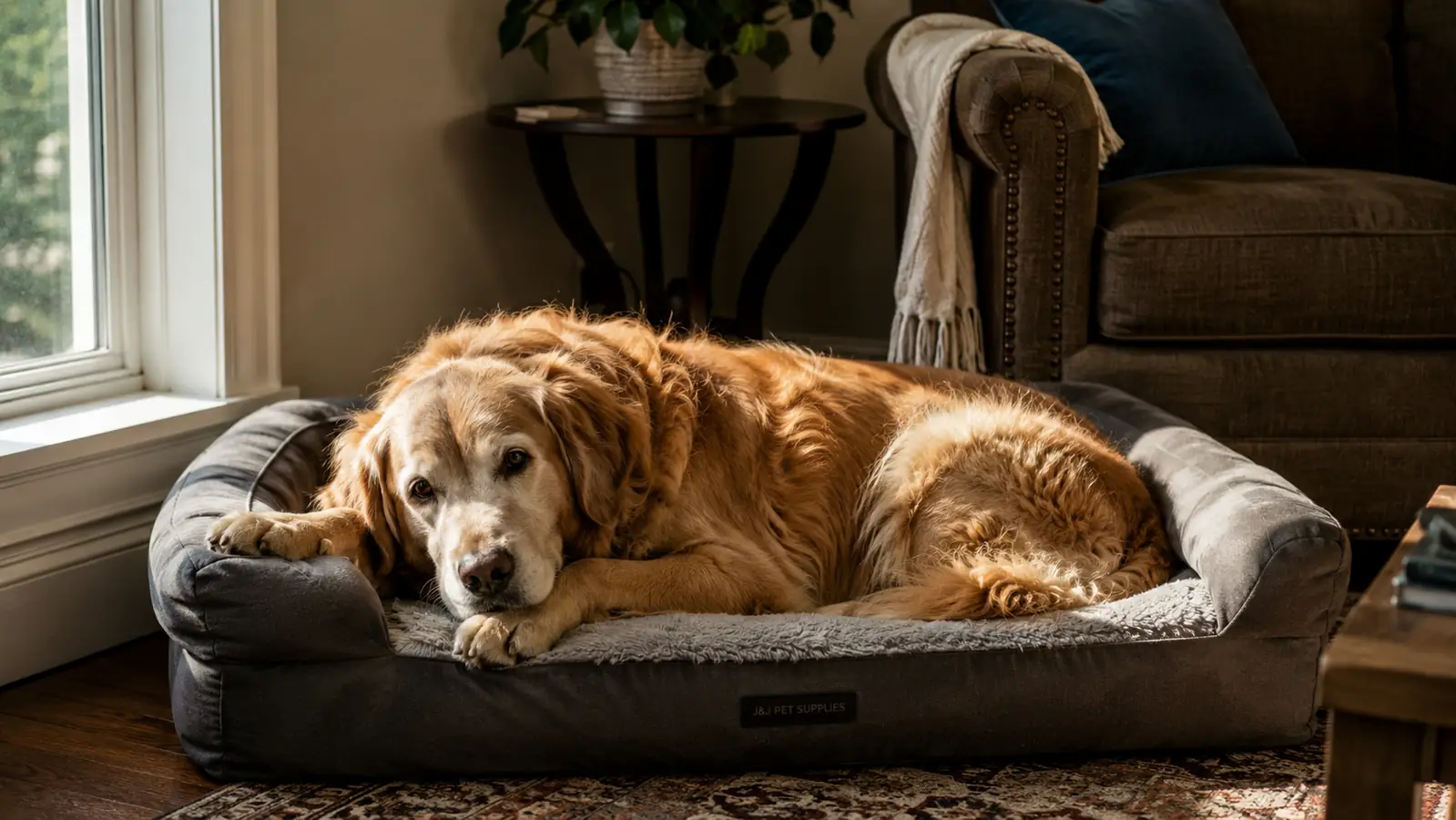
If you are trying to decide between an orthopedic dog bed and a regular cushioned dog bed, here is the short version. For a dog like my Duke, a nine-year-old Golden Retriever whose mornings have gotten stiffer as he has aged, the orthopedic bed earns its higher price. The Bedsure Orthopedic Dog Bed I keep in my living room has a solid layer of supportive foam underneath the surface, not just loose stuffing, and it holds his weight without flattening out the way his old bed did within a single season. A regular cushioned bed still has a place in plenty of homes, especially for a younger dog, a spare bed for the garage, or a budget that just does not stretch that far this month. Neither one is the wrong answer. It comes down to what your dog's body actually needs and what you are willing to spend to get it.
I did not set out to become someone with opinions about dog bed foam. For years Duke slept on a plain stuffed cushion bed I picked up at the grocery store, the kind that is basically a big pillow with a zipper. It worked fine when he was younger. But somewhere around his eighth birthday I started noticing him take longer to get up in the mornings, and a little stiffness in his back legs after he had been lying still a while. My vet told me some of that is normal aging and some of it could be early joint changes, and that a supportive surface can make lying down and standing up more comfortable, though a bed is not a treatment for anything and it will not undo what is happening in his joints. That conversation is what sent me looking at orthopedic beds in the first place, and it is why I bought the Bedsure bed to put up against the plain cushioned one Duke had been using for years.
| Bedsure Orthopedic Dog Bed | Standard Cushioned Dog Bed | |
|---|---|---|
| Price | Costs more upfront | Cheaper upfront |
| Fill and Support | Dense foam base layer under a plush top, holds a dog's shape without bottoming out | Loose fiberfill or thin poly-fill, compresses under weight almost immediately |
| Weight of the Bed Itself | Heavier, around 8 to 9 pounds for the large size, awkward for one person to haul upstairs | Light enough to carry with one hand, easy for anyone in the house to move |
| Moving It Between Rooms | Bulkier and stiffer, takes some effort to shift from the living room to a bedroom | Folds and tucks under an arm easily, good for a bed that travels around the house |
| Washable Cover | Removable, zippered, machine washable cover that goes right back over the foam | Usually spot-clean only, some models are not machine washable at all |
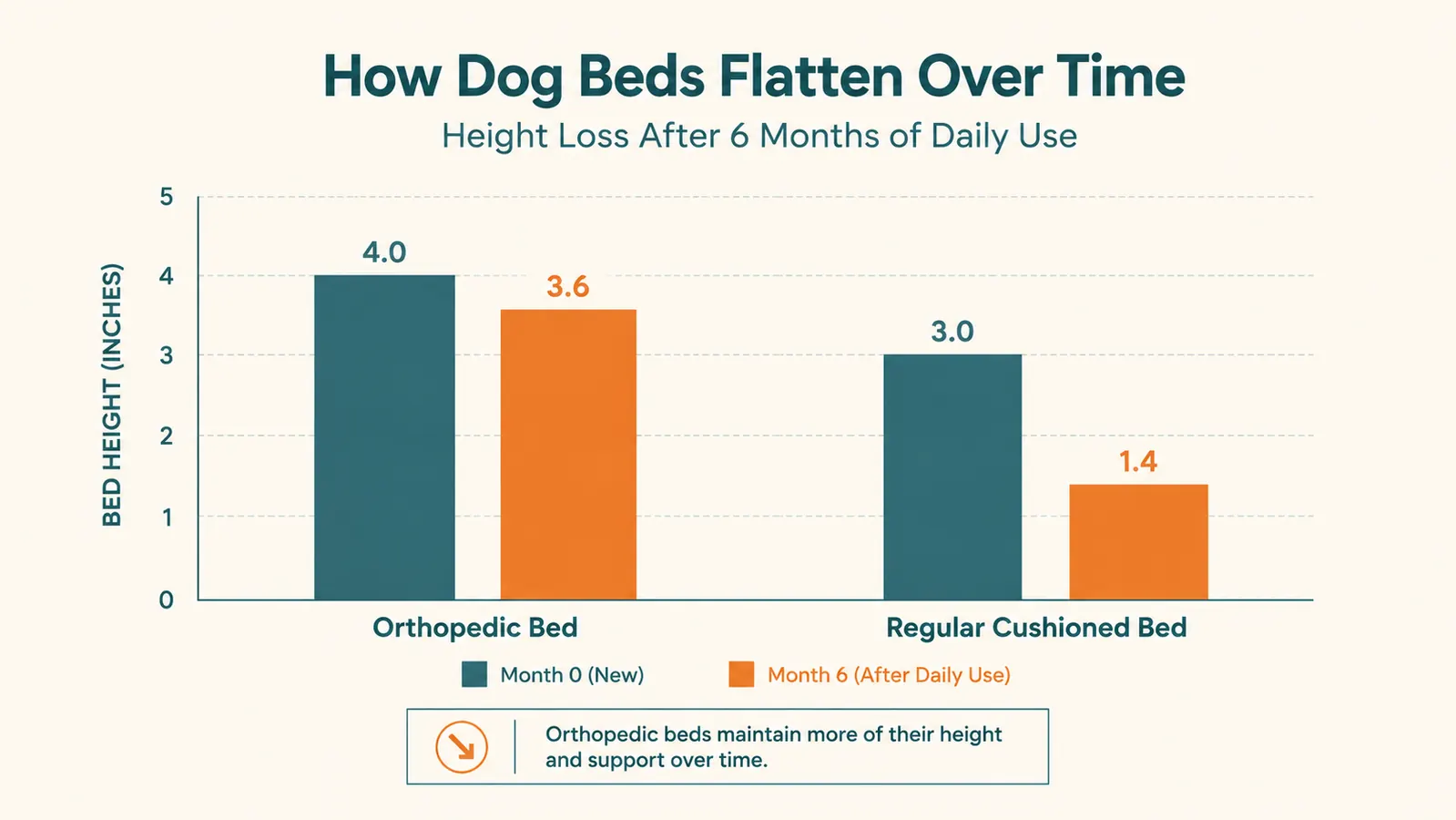
| Durability Over Time | Holds its shape and loft well past six months of daily use in my living room | Noticeably flatter and lumpier within a few months, especially under a larger dog |
| Comfort for Stiff Mornings | Contoured bolster sides and a supportive surface that reduces pressure points on hips and elbows | Minimal edge support, a dog can sink to the floor underneath with almost no cushioning left |
| Bottom Grip and Water Resistance | Nonslip waterproof-backed bottom that stays put on hardwood and handles the odd accident | Usually a plain fabric bottom that slides on smooth floors and soaks through if it gets wet |
Where the Bedsure Orthopedic Bed Wins
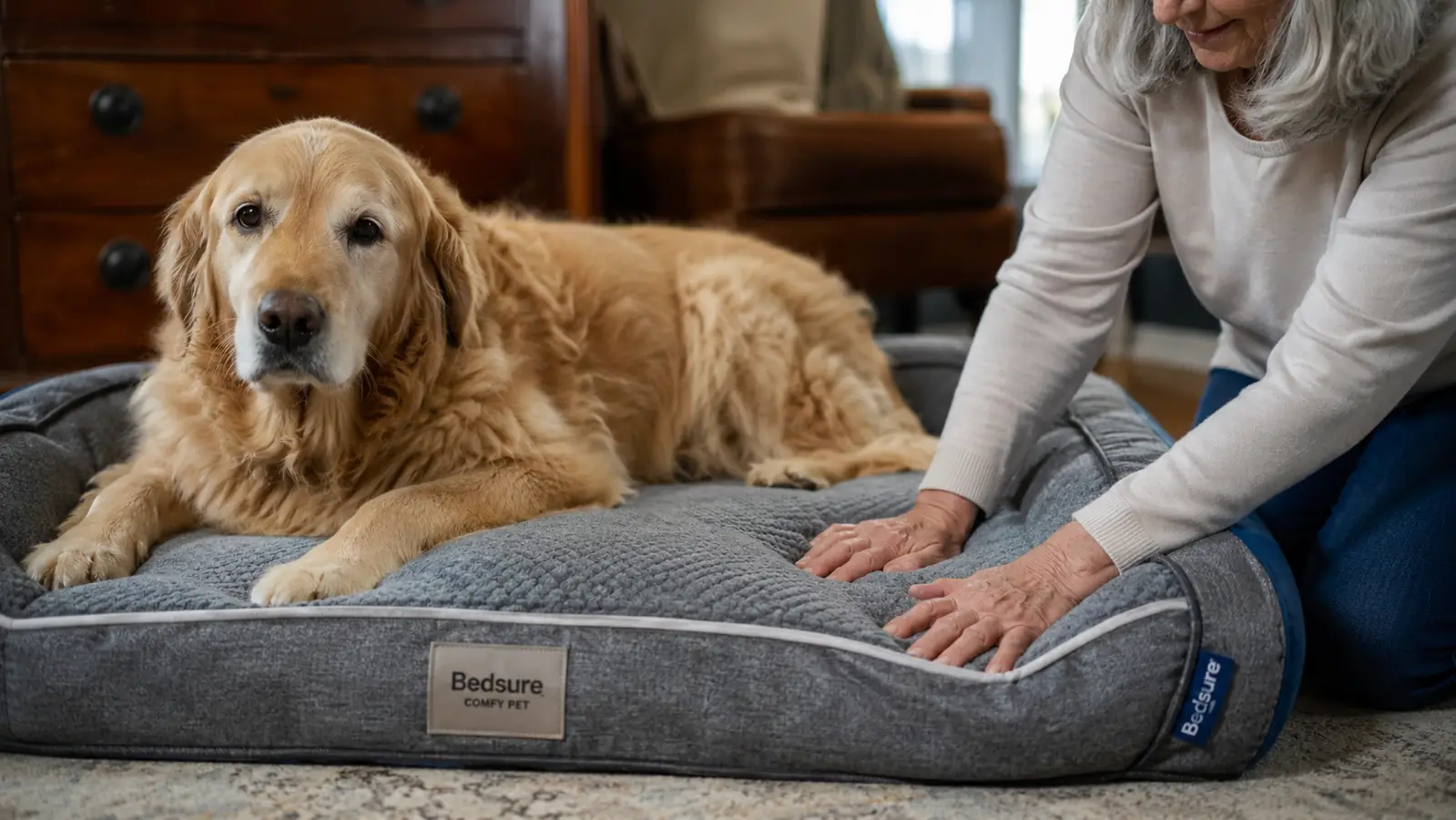
The foam is the whole story here. When I press my hand into the Bedsure bed, it gives, then it pushes back and holds its shape, the way a good mattress does. Duke's old cushioned bed never did that. Within a few months it had a permanent dent where he always laid, and by the time I finally replaced it, he was basically sleeping on carpet with a thin layer of fabric over it. The orthopedic bed still looks close to how it did the day it arrived, and I have been using it for the better part of a year now.
The difference in how Duke gets up in the mornings was not subtle either. He is a 75 pound dog, and on his old bed, getting up meant a slow, effortful push against a surface that had almost no resistance left to push against. On the orthopedic bed, the foam gives him something firm to press off of, and I genuinely notice him moving with less hesitation, especially on cold mornings when he tends to be stiffest. I am careful not to overstate what a bed can do. It is not medicine and it is not going to fix a joint problem. But a supportive surface clearly makes the physical act of standing up easier on him, and that alone has been worth the price difference to me.
The bolster sides matter more than I expected too. Duke likes to rest his chin on the raised edge, and it gives him a sense of being tucked in rather than just lying flat on the floor. The removable cover has also earned its keep. Between muddy paws after a walk and the occasional accident that comes with an aging dog, being able to unzip the whole thing and toss it in the washing machine has saved me more than one afternoon of scrubbing a stain out of fabric that was never meant to come off.
Sizing turned out to matter more than I expected too. I measured Duke lying on his side before I ordered, nose to tail plus a few extra inches, and went with the large so he could stretch out fully without a paw hanging off the edge. His old cushioned bed was a size he had simply outgrown years ago and I never noticed, because there was nothing structural about it to make the mismatch obvious. With the Bedsure, the raised sides make it clear at a glance whether he actually fits, and he does, comfortably, even when he is stretched out flat on a warm afternoon.
It handles our whole household well, too. Patches, my shorthaired cat, has claimed a corner of it more than once when Duke is out in the yard, and the nonslip bottom means it does not go skidding across the hardwood when she jumps up onto it. My grandkids also like to sit on the edge of it on weekends while they pet Duke, and the bed holds up fine to that kind of everyday traffic, which a flimsier cushion probably would not.
Where the Regular Cushioned Bed Wins
I am not going to pretend the plain cushioned bed does not have real advantages, because it does. The price is the obvious one. You can pick up a decent cushioned bed for a third of what the orthopedic bed costs, and for a younger, healthier dog with no joint concerns, that lower price makes plenty of sense. Not every dog needs orthopedic support, and I would never tell someone with a spry two-year-old Labrador that they are doing something wrong by buying the cheaper option.
The lighter weight is genuinely useful too. If you like to move your dog's bed from the living room to a bedroom at night, or you take it along in the car for trips to the lake house, a plain cushioned bed is much easier to handle. The Bedsure bed is not something I want to be lugging up and down stairs every day, but Duke's old cushioned bed I could tuck under one arm without thinking twice about it. For a household that needs a bed to travel, that lighter build is a real point in its favor.
There is also something to be said for how uncomplicated it is. A plain cushioned bed does not ask anything of you. There is no cover to unzip and rewash, no foam to worry about compressing under a heavier dog, nothing to think about beyond pulling it out of the box and setting it down. For a first dog, a foster situation, or anyone who just wants somewhere for a dog to nap without turning it into a research project, that simplicity is worth something on its own.
There is also something to be said for having a low-cost spare. I keep an old cushioned bed in the garage for when Duke rides along on a longer car trip, or for when the grandkids' dog comes to visit for the weekend and needs somewhere of his own to lie down. I would never spend orthopedic-bed money on something that mostly sits folded in a closet. For that kind of backup use, the cheaper bed is exactly the right tool.
The bed that changed Duke's mornings
If your dog is starting to move a little slower getting up, the extra support is worth seeing for yourself. I did not expect this much difference from a bed.
Amazon Check Today's Price on Amazon →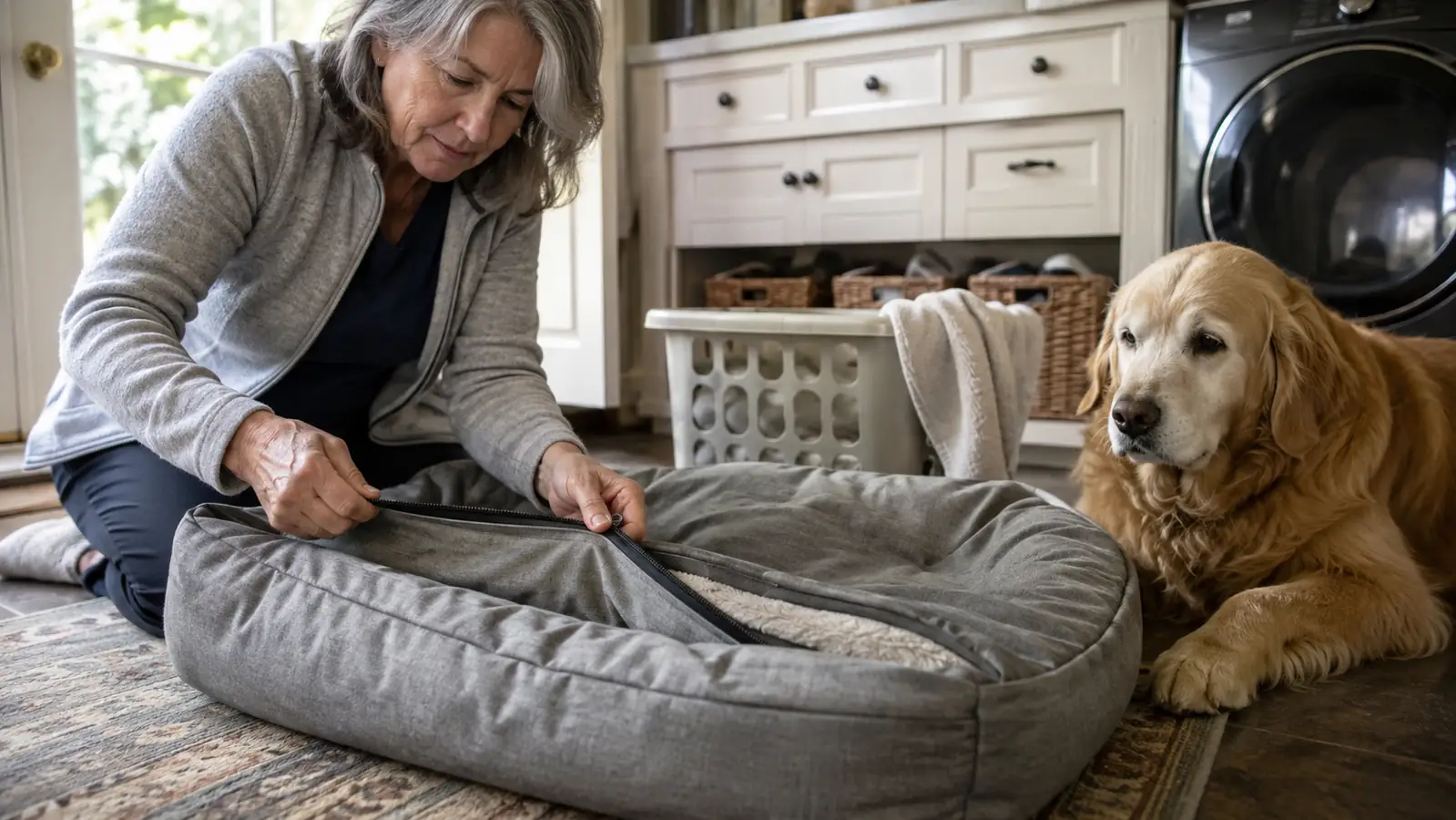
Who Should Buy Which
If your dog is a senior, carries extra weight, or has already been stiffer getting up the way Duke has, the orthopedic bed is worth the extra money. It is not a fix for arthritis or any joint condition, and if you are genuinely worried about how your dog is moving, that conversation belongs with your vet first, not with a dog bed review. But as far as everyday comfort goes, a supportive surface that does not flatten out under them is a small thing that can make a real difference in how easily they get through a day.
If you have a younger dog with no signs of joint trouble, or you are working with a tight budget this month, a regular cushioned bed is a perfectly reasonable choice. There is no reason to spend on orthopedic support your dog does not need yet. I would rather see someone buy a plain bed they can actually afford than skip a bed altogether while saving up for the pricier one.
For households like mine, with more than one pet and grandkids in and out most weekends, I also think about durability. The Bedsure has held up to Patches napping on it, Duke's muddy paws, and general everyday wear far better than the cushioned bed ever did. If you are only going to buy one bed and want it to last, that durability adds up over time even if the sticker price looks steeper at first.
If you have more than one dog in the house, or dogs of very different sizes, it is worth thinking through separately for each one rather than assuming whatever worked for your last dog will work for this one. A younger, lighter dog in the house might do just fine on the plain cushioned bed for years, while an older or heavier dog benefits from the support sooner. There is nothing wrong with having one of each under your roof, one orthopedic bed for the dog who needs it and a plain one for the dog who does not, rather than buying the same bed twice out of habit.
My honest advice, if you are on the fence, is to think about where your dog is in life rather than just the price tag. A young, healthy dog does not need what Duke needs right now. But once you start noticing the slower mornings, the hesitation before jumping up on the couch, or just a dog that seems to be getting up more carefully than they used to, that is usually the point where the orthopedic bed starts paying for itself in comfort you can actually see.
Give your dog somewhere better to land
Duke's old bed lasted less than a year before it went flat. This one is still holding its shape, and his mornings show it.
Amazon Check Today's Price on Amazon →