
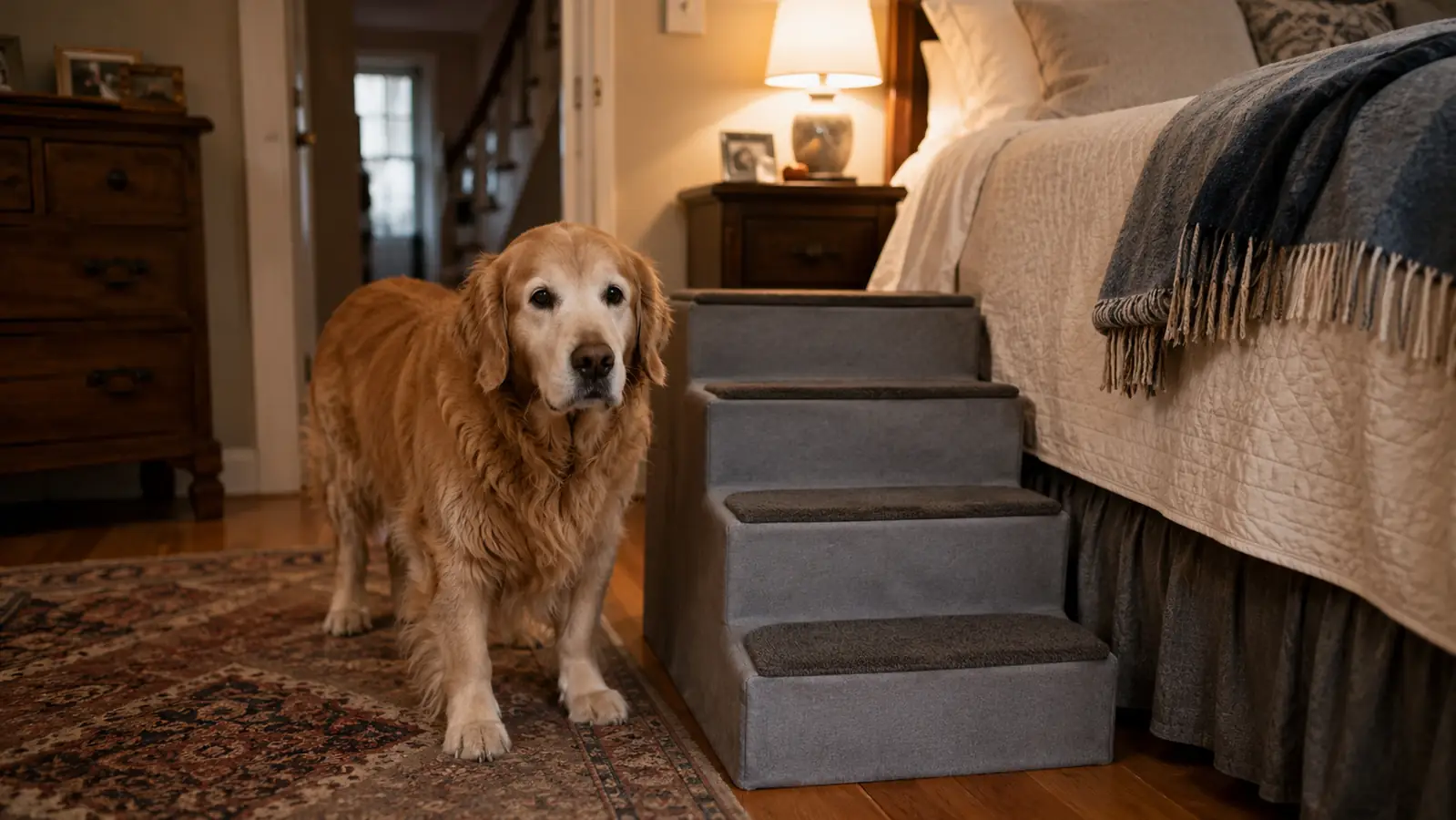
Duke stopped jumping up onto our bed sometime last winter. He's a nine-year-old Golden Retriever, seventy pounds, and for years he'd hop up onto the mattress every night without a second thought, usually right when I was trying to smooth the quilt. Then one evening he just stood there at the edge, front paws up, back end planted on the floor, looking at the bed like it had gotten taller overnight. It hadn't. He had gotten older, and the mild stiffness in his hips our vet had mentioned at his last checkup was starting to show up in the small everyday things, not just the long walks.
The EHEYCIGA five step set is what I ended up buying, and I want to be honest right up front about something. It is marketed on the listing as pet steps for small dogs and cats. Duke is not a small dog. I almost skipped over it for that reason, but the reviews kept mentioning owners using it with larger breeds too, so I decided to try it and see for myself rather than assume the label ruled him out. Months later, I have a full, honest answer for whether it actually held up under a dog his size.
The Quick Verdict
A sturdy, well built set of stairs that Duke learned to use within a couple of weeks and that has held his weight without wobbling, though the width and step depth clearly weren't designed with a seventy pound dog in mind, and a nervous dog will need real patience to learn it.
Amazon Check Today's Price →Is Your Dog Hesitating at the Edge of the Bed?
If your older dog has started pausing before jumping the way Duke did, that hesitation is usually the first sign a straight jump has gotten harder on him. See today's price and current availability before you decide.
Amazon Check Today's Price on Amazon →How I've Used It
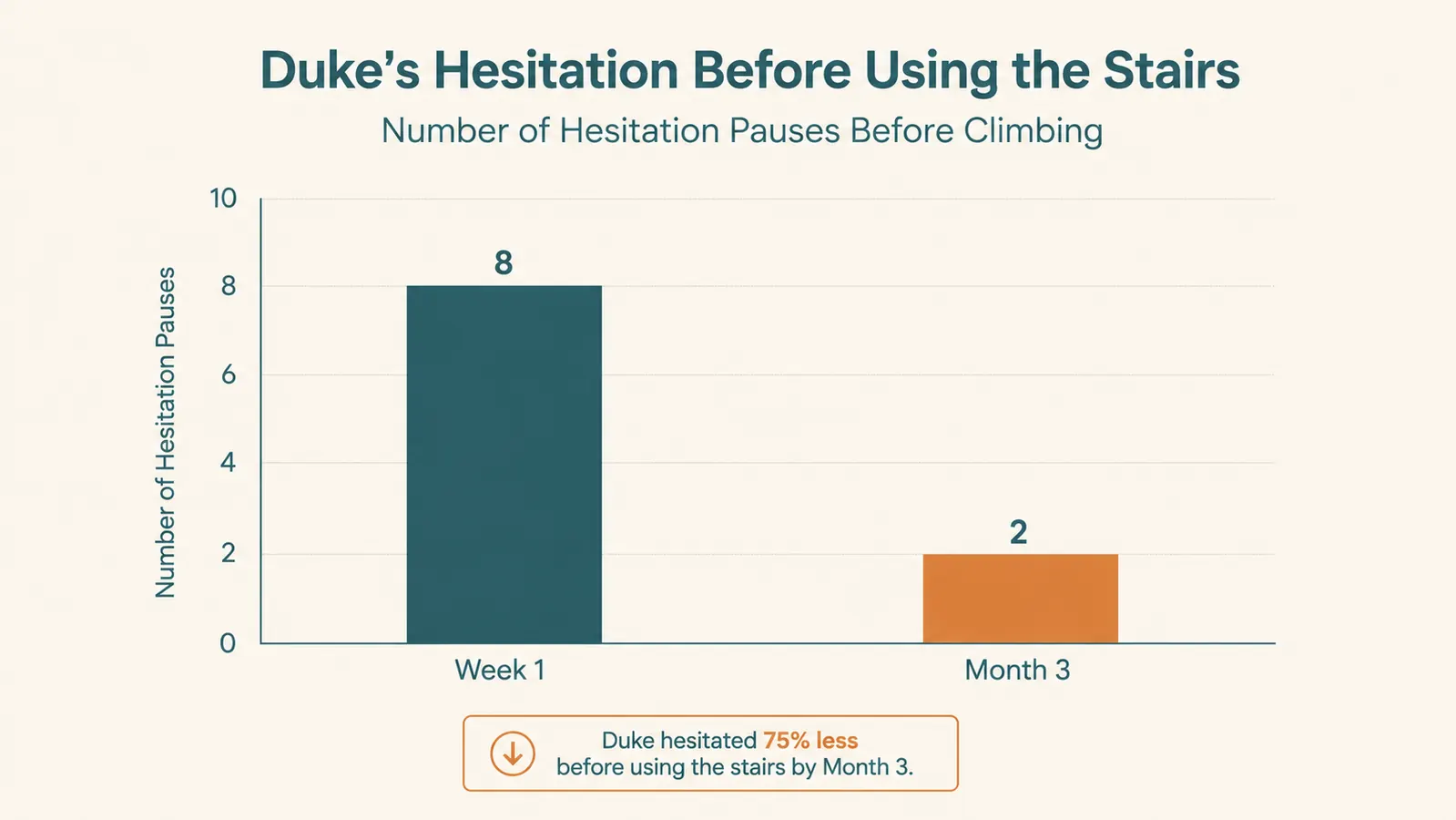
The stairs sit tucked against my side of the bed, angled so Duke can approach from the open side of the room rather than squeezing between the nightstand and the frame. I set them up the same evening the box arrived, mostly out of impatience, and I didn't expect much from him that first night. I was right not to expect much. He sniffed the bottom step, put one paw on it, and backed straight off like it might tip over.
It took about two weeks of short, low pressure practice to get him comfortable. I'd walk him up slowly with a treat in my hand, one step at a time, and let him come back down the same way rather than jumping off the side, which he wanted to do at first. By the start of week three he was going up on his own most nights, though he still preferred me standing nearby those first few weeks, the way he'd look over his shoulder to make sure I was there before he started climbing.
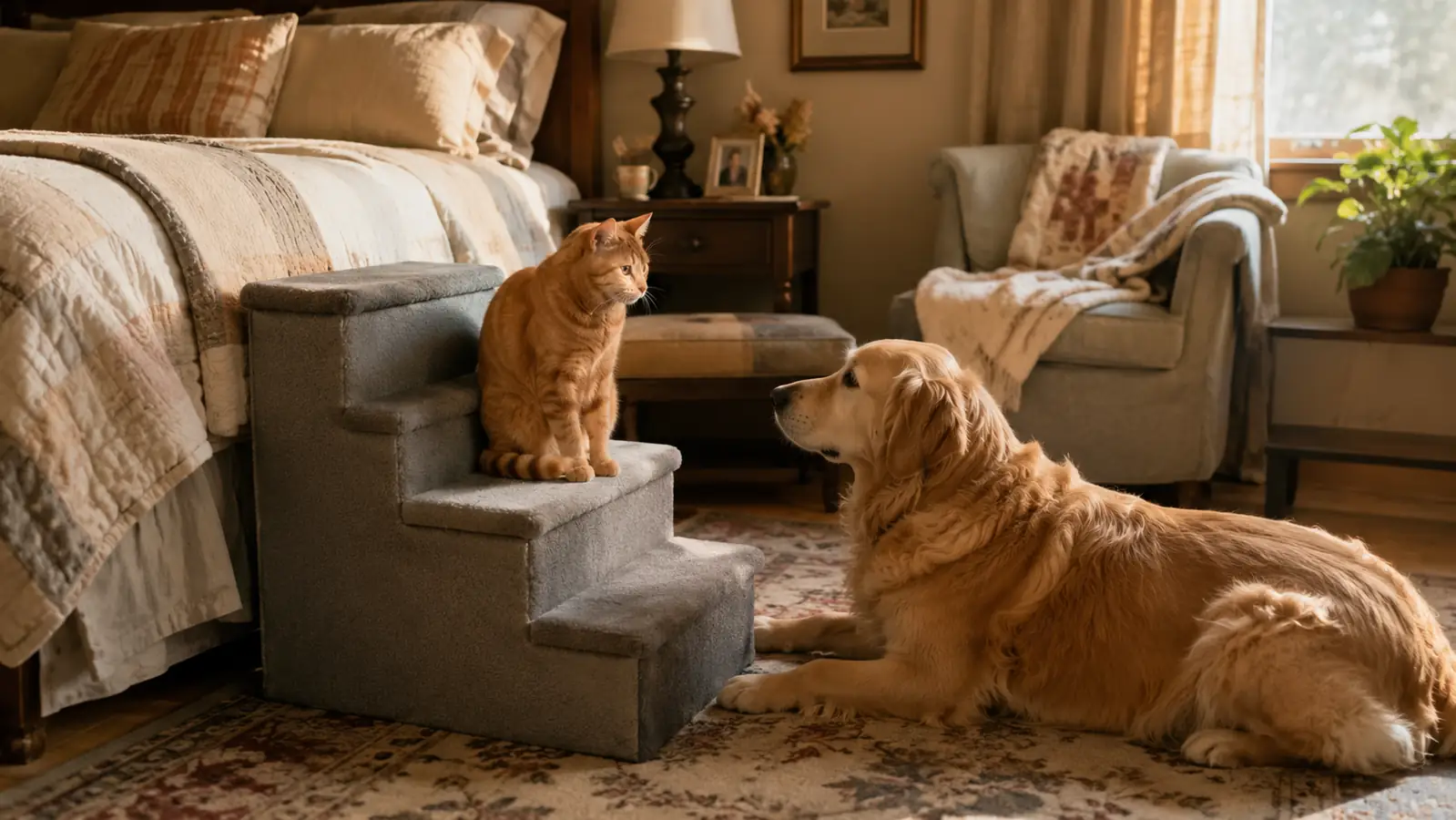
Months in, it's just part of his nightly routine now. He walks over, climbs the five steps at his own steady pace, and settles onto the bed the same way he always has, minus the jump. Patches, our cat, took to it immediately and uses it as her own personal perch, sitting on the middle step to watch the room like it was built for her, which honestly might be closer to the truth given the size listed on the box.
Built for Small Dogs, But How It Handled Duke's Size
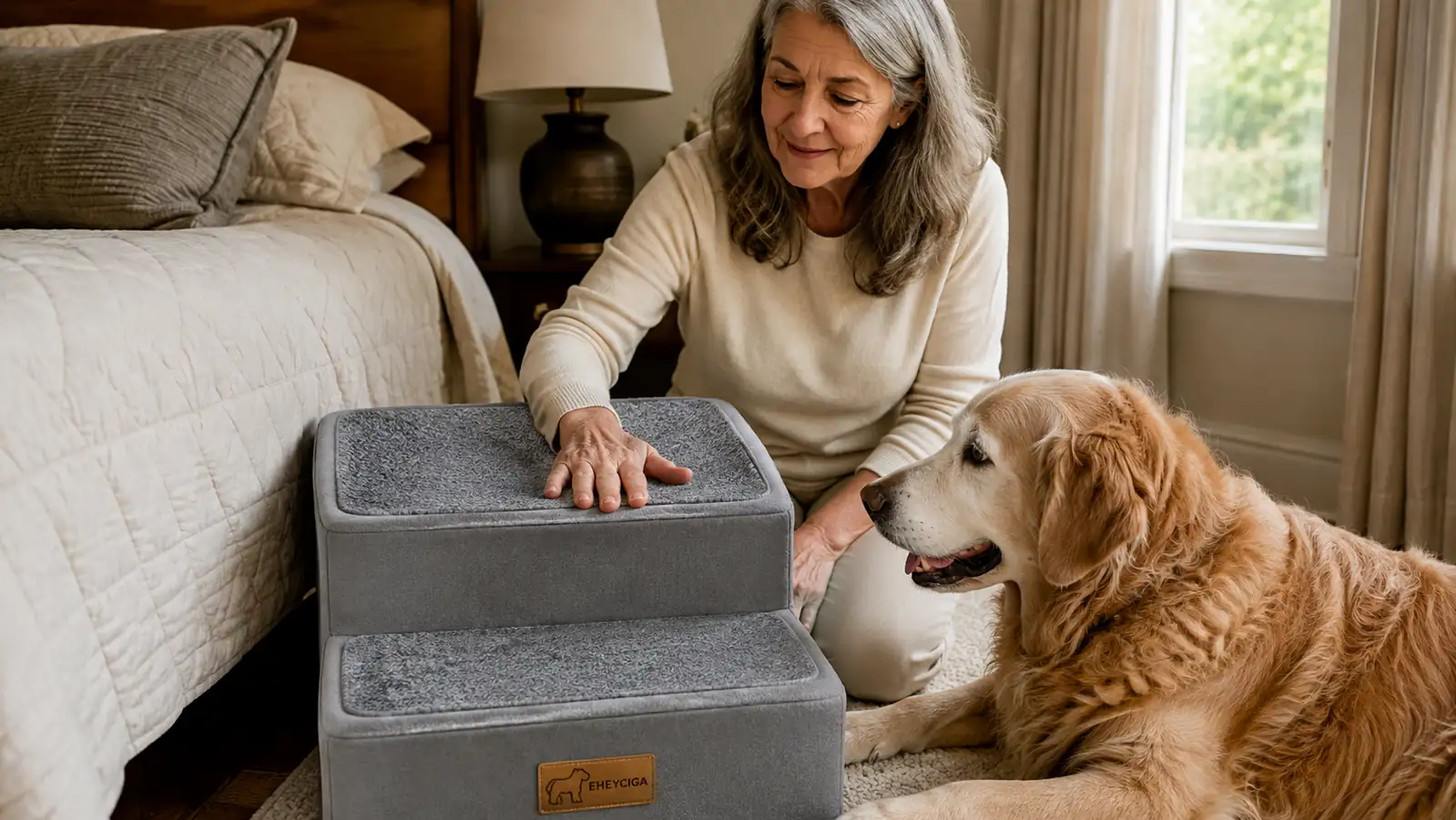
This is the part I get asked about most, because I know a lot of people reading a review like this have a big dog too and are wondering if a product labeled for small dogs and cats is worth the risk. My honest answer is that it depends on what you need it to do. The EHEYCIGA frame has felt solid under Duke the entire time. I've never felt it shift or flex under his weight, even climbing at a normal pace rather than creeping up carefully.
Where I do notice the size mismatch is in the width of each step and how much room Duke's paws actually have. His front paws sit close to the edges on several of the steps, especially near the top, and I've watched him place his feet more deliberately than a smaller dog would need to. It's not dangerous the way it's set up in our bedroom, on carpet, against a wall for stability, but I wouldn't want to test it on a slick floor or push a full sized dog to use it at any real speed.
I never found a stated weight limit printed clearly anywhere obvious on the packaging, and I'd genuinely encourage anyone with a dog Duke's size or larger to check the current listing carefully for the manufacturer's weight rating before buying, rather than going on my experience alone. What worked for one steady, careful seventy pound Golden Retriever climbing slowly on carpet isn't a guarantee for every large dog in every home.
How It's Held Up After Months of Daily Use
The non-slip surface on each step is the feature I care about most day to day, and it's done its job. Duke's nails click across our hardwood floors constantly, but on the EHEYCIGA steps his feet grip and stay put, even the nights he comes up from outside with damp paws after a walk in the rain. I have not seen any sliding, catching, or scrambling for footing since the very first uncertain week.
The grey fabric-covered foam on top of each step has flattened slightly where Duke's back paws land most often, roughly the third and fourth steps, but it hasn't torn, cracked, or come loose from the frame underneath. I vacuum the covers once a week along with the rest of the bedroom, and any mud or dirt Duke tracks in wipes off the surface easily enough with a damp cloth. The frame itself hasn't creaked, wobbled, or shown any sign of the joints loosening the way cheaper furniture sometimes does after months of real weight going up and down it twice a day.
The one thing that surprised me is how much dust and pet hair collects underneath the lowest step where I can't easily reach with the vacuum attachment. It's a small nuisance, not a real complaint, but if you're particular about that kind of thing, plan on pulling it away from the wall every so often for a proper cleaning.
The Nighttime Trip Hazard Nobody Really Warns You About
Nobody mentioned this part in the reviews I read before buying, so I want to say it plainly. A set of stairs sitting beside your bed is a trip hazard for the humans in the house too, especially at two in the morning when you're half asleep and swing your legs out without thinking. I caught my foot on the top step once in the dark during my first month with them and nearly went down. Since then I keep a small nightlight plugged in on that side of the room, and I've gotten in the habit of stepping to the other side of the bed frame rather than straight over the stairs.
If you have grandkids visiting on the weekends the way we do, that's worth thinking through too. Ours know to walk around rather than over the EHEYCIGA, but a younger child moving fast in a dark room at night could easily catch a foot the same way I did. It's a small thing to plan for, a nightlight, a clear path, maybe keeping the door cracked for a bit of hallway light, but it's real and I'd rather tell you honestly than let you find out the hard way I did.
Teaching a Nervous Dog to Actually Use Them
Duke isn't a nervous dog by nature, but new furniture in the bedroom still made him cautious those first couple of weeks, and I think that's true for most dogs meeting a set of stairs for the first time. Pushing or lifting him onto it to force the point never worked, it just made him more hesitant the next time. What did work was treating it like any other new skill, short sessions, a treat waiting on the next step up, and letting him choose to try it rather than making him.
If your dog is more anxious than Duke, or older and already unsteady on his feet, I'd give this even more time than I did. A dog who feels rushed or unsteady on a new set of stairs can genuinely get hurt trying to back off them too fast. Patience here isn't optional, it's the whole point of buying stairs instead of just letting him keep straining to jump.
What I Compared It To Before Buying
Before landing on these stairs, I seriously considered a ramp instead, since our bed sits fairly tall and I wondered if a gradual incline would be gentler on Duke's hips than climbing steps. I read through a good number of reviews on both styles and talked to our vet about it too. She didn't have a strong preference either way for a dog with Duke's mild stiffness, and said either could work as long as he used it consistently instead of still trying to jump on his own some nights.
What tipped me toward stairs in the end was space. A ramp long enough to be gentle would have taken up more of our bedroom floor than the EHEYCIGA does, and with grandkids underfoot most weekends, floor space matters in our house. I also looked at taller, bulkier pet staircases built more like real furniture, but most were priced well above what I wanted to spend, and I wasn't convinced the extra bulk would matter much for how we actually use it.
What I'd Tell You Honestly About the Fit
I'm not a vet, and I want to be careful not to oversell what a set of stairs can do. This product hasn't fixed Duke's stiffness or made him younger, and it isn't a treatment for anything going on in his hips. What it has done is take one straining jump out of his evening, twice a day, every day, for months now, and that's a real thing even if it's a small one. If your dog is limping, crying out, or clearly in pain getting around, that's a conversation for your veterinarian first, stairs second.
As for the size question that brought most of you to this review, I'd call it a cautious yes for a steady, careful large dog on a stable, carpeted surface, and a firmer maybe for anything heavier or less careful than Duke. The EHEYCIGA is genuinely built with smaller dogs and cats in mind, and it shows in the proportions even though it's held up fine under his weight so far.
What I Liked
- Frame has stayed solid and stable under a seventy pound dog for months with no wobble
- Non-slip step surface has never let Duke's paws slide, even coming in from wet weather
- Compact footprint fits our bedroom better than a ramp would have
- Foam covers wipe clean easily and vacuum without falling apart
- Duke learned to use it fully within about two weeks with patient, low pressure practice
Where It Falls Short
- Step width and depth clearly built with smaller dogs and cats in mind, tight for a large breed's paws
- No clearly stated weight limit printed on the packaging, worth confirming on the current listing before buying for a big dog
- A real trip hazard for humans at night until you get used to where it sits
- Foam has flattened somewhat on the steps Duke lands on most
- Dust collects underneath the bottom step where the vacuum attachment doesn't reach easily
He sniffed the bottom step, put one paw on it, and backed straight off like it might tip over. Months later, it's just part of his nightly routine.
Who This Is For
If your dog is starting to hesitate before jumping onto a tall bed the way Duke did, and you'd rather give him a gentle, gripped set of steps than watch him keep straining, this is worth a serious look, especially for small to medium dogs and cats it was actually designed around. For larger, steadier dogs like Duke, it can still work well, but go in with realistic expectations about the width and take the training slowly. It's also a solid pick for a household short on floor space where a full ramp just wouldn't fit comfortably.
Who Should Skip It
If your dog is showing real pain, limping, or reluctance to move at all, please talk to your vet before assuming stairs of any kind are the fix, that's a medical question, not a furniture one. I'd also think twice if you have a large, heavy, or clumsy dog and a home with slick tile or hardwood right where the stairs would sit, since the narrower steps leave less margin for a misstep than they would on carpet. And if nighttime safety around the bed is already a concern in your house, whether that's young grandkids or your own footing in the dark, plan for that trip hazard honestly before you buy, the same way I wish someone had told me.
See What Months of Real Use With a Big Dog Looks Like
Duke still isn't a small dog, and these stairs still hold him steady every night. If your dog has started pausing at the edge of the bed, check today's price and see if it's the right fit for yours.
Amazon Check Today's Price on Amazon →