
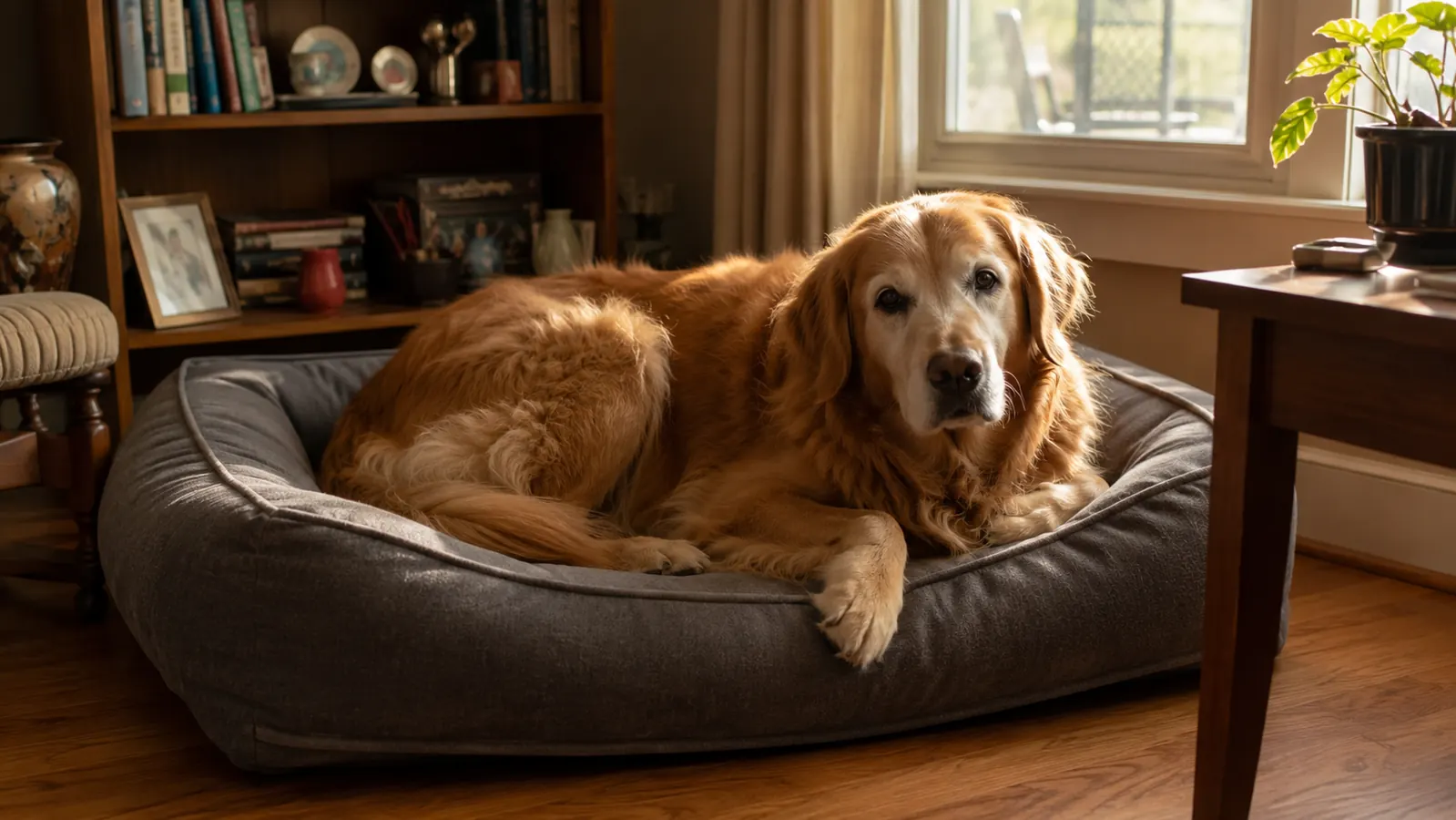
If your dog has started getting up slower, favoring a leg, or hesitating before he jumps onto the couch, please see your vet before you change a single thing at home. Stiffness, limping, and slowing down can mean arthritis, but they can also mean something else entirely, and only a vet exam, and sometimes X-rays, can tell you which. This article is not about diagnosing him or treating him. It is about what I did at home, after our vet confirmed some arthritis in Duke's hips, to make his nights more comfortable once we already had a plan in place, starting with the Bedsure orthopedic bed we bought for him. Nothing here should replace what your own vet tells you to do.
Duke is our nine-year-old Golden Retriever, and for years he slept wherever he pleased, usually sprawled across the hardwood in the hallway. Somewhere around his eighth birthday I noticed he was slower to get up from that hard floor in the mornings, a little stiff through the hips, and less eager to follow the grandkids up the stairs on the weekends they visit. Our vet checked him over, talked to us about his joints, and one of the simple things she mentioned was giving him a warmer, better-supported place to lie down at night. That is where the orthopedic bed came in, and below are the five steps I actually followed to set his up.
Give him a softer landing than the floor tonight
Hard floors do a stiff, older dog no favors overnight. The Bedsure Orthopedic Dog Bed has a thick supportive base, raised bolster sides for him to rest his head on, and a removable cover you can wash after every muddy paw and hair tumbleweed.
Amazon Check Today's Price on Amazon →Step 1: Talk to your vet about what's actually going on
This step comes first because it matters more than any bed you could buy. When I first noticed Duke was slow to rise, I assumed he was just getting older, the way we all do. Our vet's exam turned up mild arthritis in both hips, nothing dramatic, but real, and she wanted to rule out anything else going on before we settled on a plan. She talked with us about his weight, his activity level, and what she wanted us watching for at home.
I am not a vet and I am not going to pretend otherwise. If your dog is limping, crying out, refusing to put weight on a leg, or suddenly won't climb stairs at all, that is a phone call to make today, not a project for the weekend. Once you have a diagnosis and a plan, an orthopedic bed is one small, sensible piece of making him comfortable at home. It is not a treatment and it will not cure or reverse anything. Think of it the way you'd think of a good mattress for your own sore back, a support, not a cure.
Once we had that conversation, I felt a lot better about the small changes we were making around the house, because I knew they fit into something bigger our vet had already reviewed. I keep a little notebook by the back door now, and after our vet visits I jot down whatever she tells us to watch for that month, so I'm not relying on memory alone when I'm deciding what he needs at home.
Step 2: Choose a bed with real support, not just softness
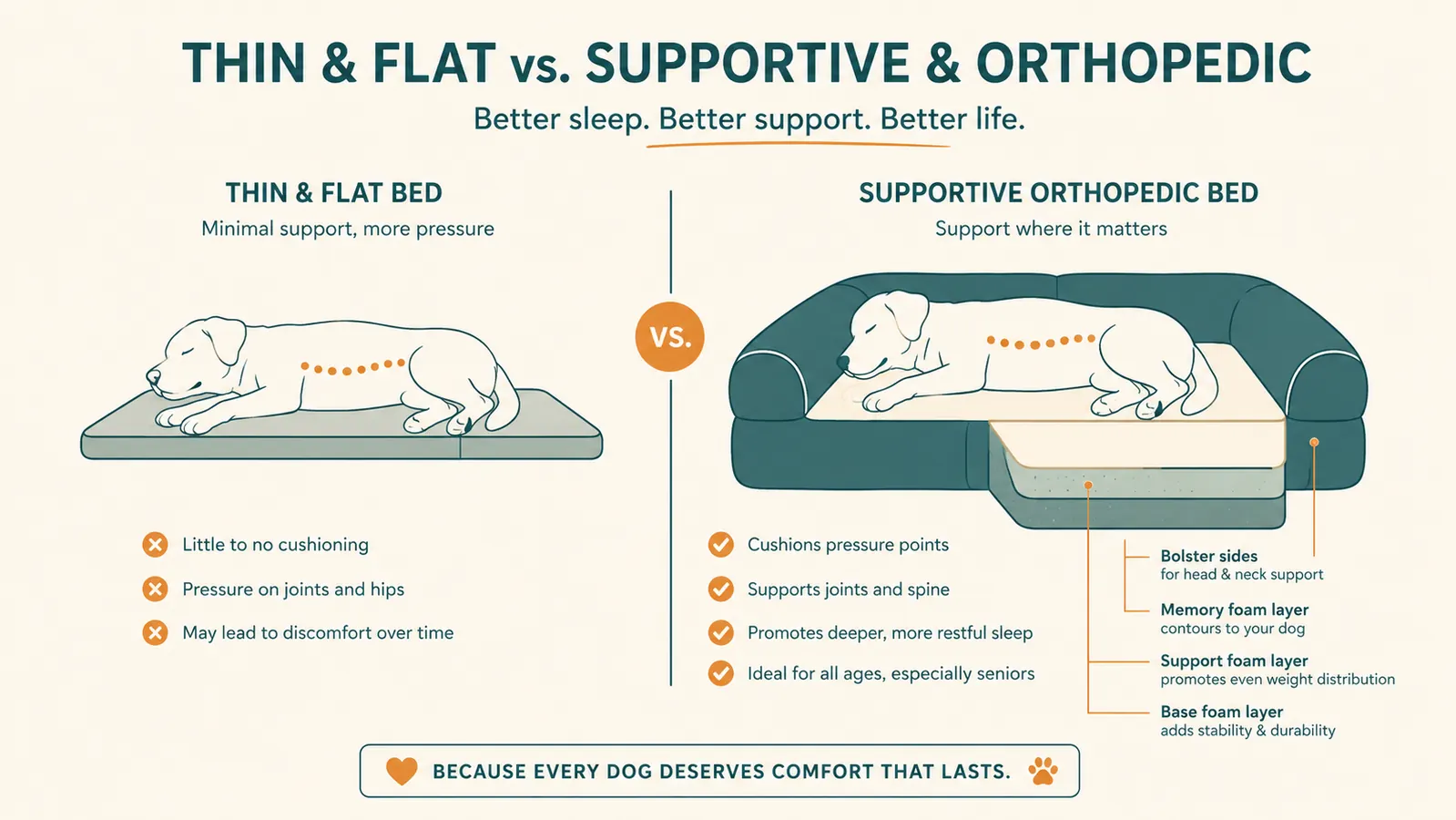
I made a mistake early on. The first bed I bought Duke was plush and pretty, but it was thin, and within a couple months it had flattened out under his weight until he was basically back on the hardwood with a layer of fabric on top. A dog with sore hips and shoulders needs something with real structure underneath him, not just a soft top layer. Looking back, I think I bought that first bed with my eyes instead of thinking about what his body actually needed.
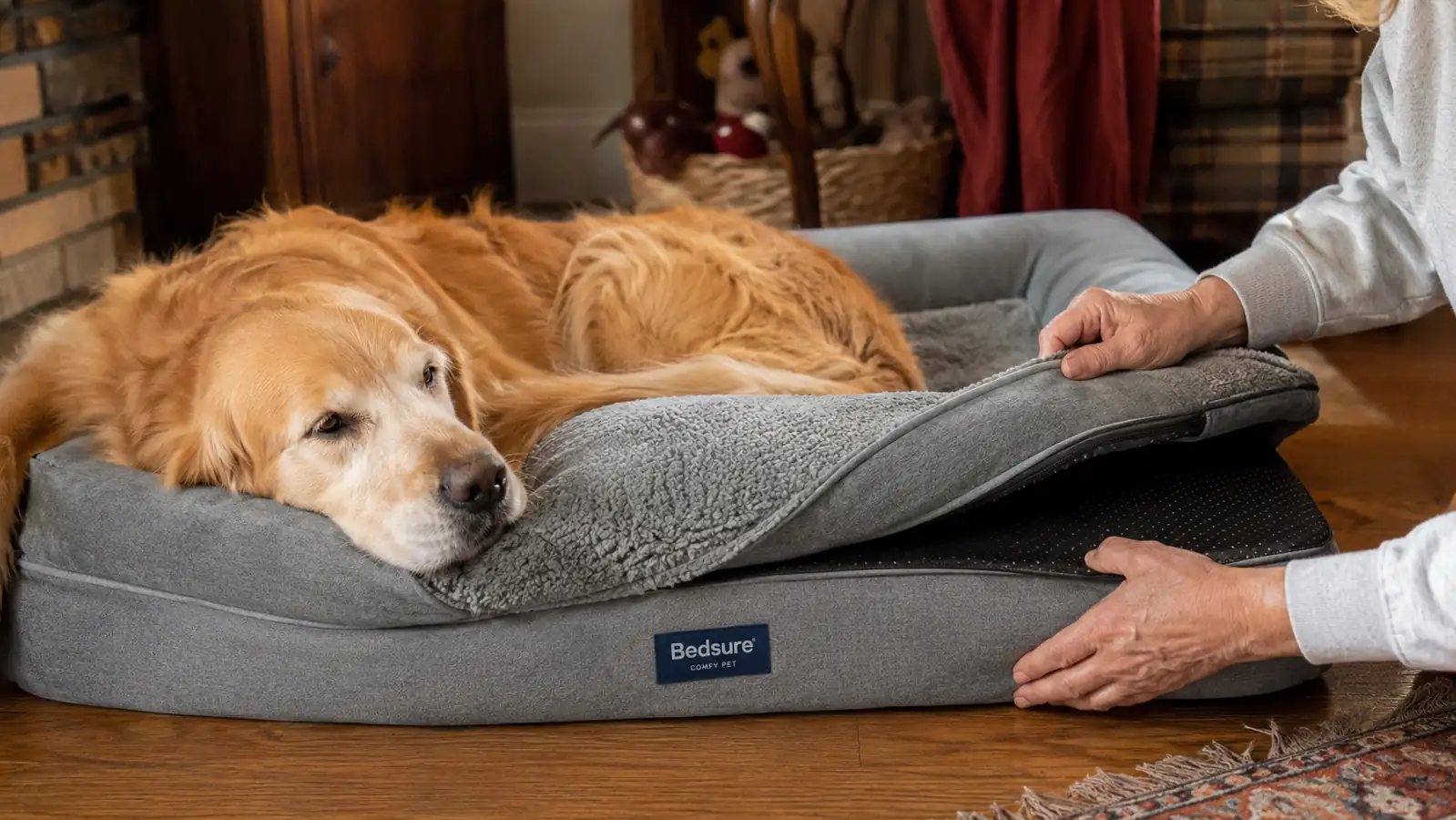
The Bedsure orthopedic bed we switched him to has a thicker supportive base with raised bolster sides. Those sides matter more than I expected. Duke likes to rest his chin on the edge, and it gives him something to lean against when he's getting up, almost like a little push-off point instead of hauling himself up flat off the floor. At 35 inches it's roomy enough for a full-grown Golden to stretch out, which matters because a dog who feels cramped will often just pick the floor instead.
The cover comes off and goes in the wash, which I'll get to in a later step, but I mention it here because it's part of choosing the right bed in the first place. A gorgeous bed you're afraid to let him use because you can't clean it doesn't do him much good. I also liked that the bottom has a nonslip grip, since our hallway floor is hardwood and a bed that slides around every time a big dog shifts his weight isn't giving him anything solid to push off of.
Step 3: Pick the right spot in the house, not just any corner
Where you put the bed matters almost as much as the bed itself. I first set Duke's up at the bottom of the stairs, thinking it was central and he'd use it often. Instead he mostly ignored it, because that spot gets a lot of foot traffic from the grandkids running up and down on weekends, and a sore, older dog does not want to nap somewhere he might get stepped on or bumped.
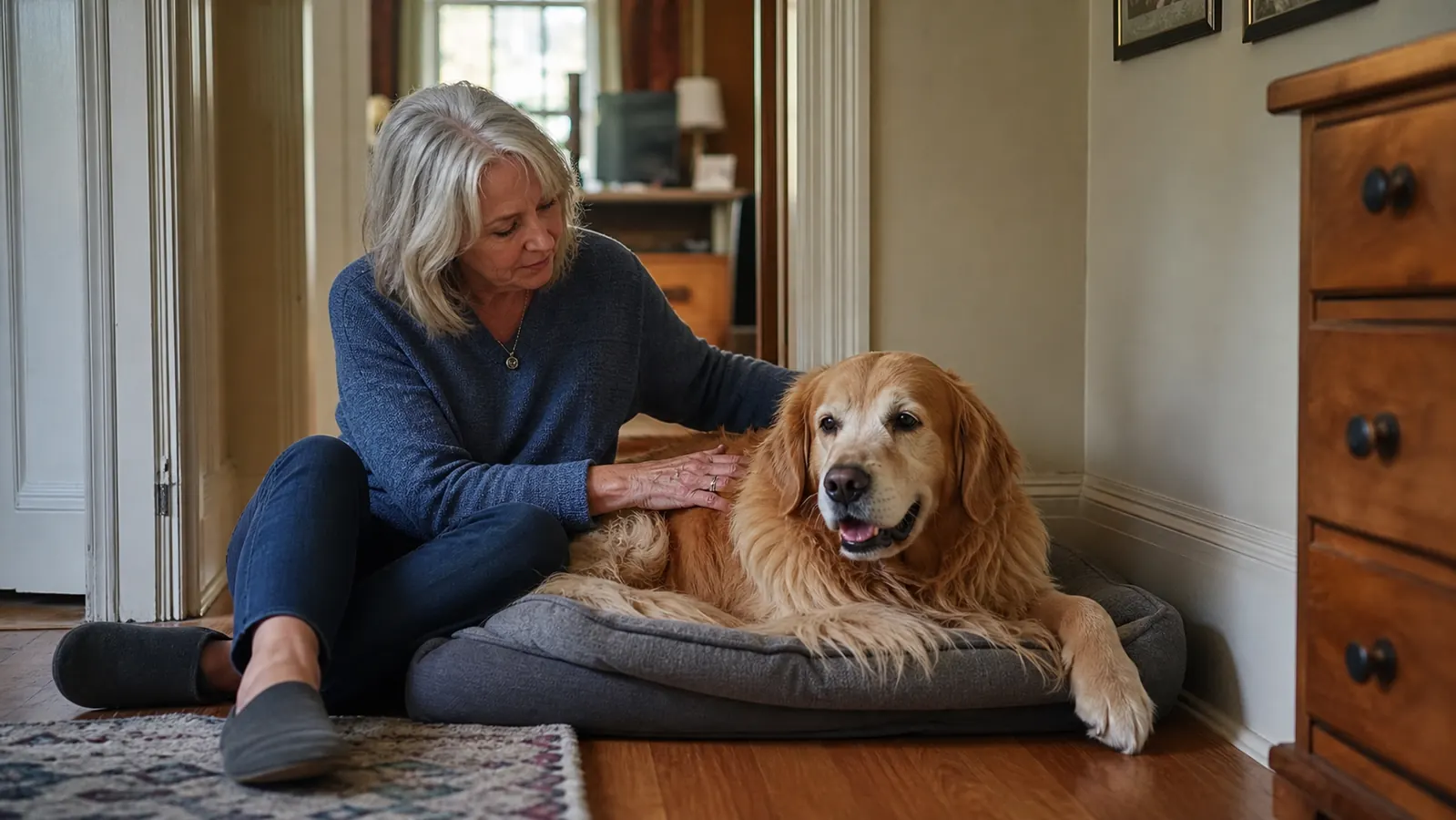
I moved the Bedsure to a quiet corner of the hallway near our bedroom, away from the busiest paths through the house, and he took to it within a couple of nights. Look for a spot that is out of the main walkway, away from drafty doors in winter, and not right next to anything loud like the washing machine or a heating vent that clicks on and off. If your dog already has a spot he gravitates to on his own, even if it's an odd corner, that's usually your best clue for where the new bed should go. Watch him for a few days before you commit to a spot, because the place he naturally picks tells you more than any guess of mine could.
We also kept a second bed for him in the living room, since Duke likes to be near the family in the evenings but still wants somewhere supportive to lie down while everyone's watching TV. He doesn't have to choose between company and comfort, and that has made a real difference in how often he actually uses the bed instead of flopping on the rug. Patches, our cat, has never once tried to claim either bed for herself, which honestly surprised me, but Duke's beds have stayed entirely his.
Step 4: Keep it clean so he actually wants to lie on it
Duke is a Golden, which means hair everywhere, and between him and the grandkids tracking things in from outside, that bed gets dirty fast. A dog with sore joints is even less likely to settle onto a bed that smells stale or feels damp, so keeping it fresh isn't just about tidiness, it's about whether he'll actually use it.
The removable, washable cover on Duke's Bedsure has been the single most useful feature for us. I pull it off, toss it in the wash on a normal cycle, and it's back on the bed the same afternoon. The waterproof layer underneath has also saved me more than once, since an older dog can have the occasional accident overnight, and I'd rather wipe down a waterproof liner than deal with a soaked foam interior. Before we had a waterproof layer, one bad night meant hauling the whole bed outside to dry, and I don't miss that at all.
I try to wash the cover every week or two, more often if he's had a muddy day outside. It takes maybe fifteen minutes of my time total, and it means the bed always smells like home instead of like a dog bed that's been through a hundred naps without a wash. A quick vacuum of the base between washes keeps the loose hair from building up in the seams too.
Step 5: Watch how he settles in, and adjust from there
The first few nights, Duke sniffed around the new Bedsure more than he actually slept on it. That's normal. Give it a week or two before you decide whether it's working. I also noticed early on that he preferred one bolster side over the other, the one facing into the room rather than the wall, probably because it let him keep an eye on things while he rested, which is very Duke.
Pay attention to how he gets up in the morning. Is he stiffer than before, about the same, or moving a little easier once he's had a night on real support instead of the hardwood? I'm not going to tell you a bed fixed Duke's hips, because it didn't and it can't. What I noticed was that he seemed to settle faster at night and didn't shift around as much trying to find a comfortable spot on the floor. That's a small thing, but for a nine-year-old dog, small things add up over a lot of nights.
If he avoids the Bedsure entirely after a couple of weeks, don't assume the bed failed. Try a different room, check that the nonslip bottom is actually gripping your floor type, or ask your vet whether there's anything else going on that's making him restless at night. A bed is one piece of the puzzle, not the whole picture.
What Else Helps
A supportive bed is one small comfort, and there are other simple things that go alongside it. We added a bathmat with good grip at the bottom of the stairs so Duke's back feet don't slide out from under him the way they used to on the bare wood. We keep his nails trimmed a little shorter than we used to, since longer nails can change how his feet meet the floor. In the colder months I've also noticed he seems to appreciate the bed being tucked away from the front door draft, so a little extra thought about airflow and temperature goes a long way too. None of this replaces whatever your vet recommends, whether that's weight management, a joint supplement, or medication. Those are conversations to have with your vet directly, not something I'll guess at here. What I can tell you is that a warm, supported place to sleep is one thing you can set up yourself this weekend, and it costs you nothing but a Saturday afternoon.
I'm not going to tell you a bed fixed Duke's hips. What I noticed was that he settled faster at night instead of shifting around trying to get comfortable on the floor.
A better night's rest starts with better support underneath him
If your dog is stiff, older, or just deserves something softer than the hardwood, the Bedsure Orthopedic Dog Bed gives him a warm, supported spot to settle into, with a washable cover for the inevitable muddy paws and shedding season.
Amazon Check Today's Price on Amazon →